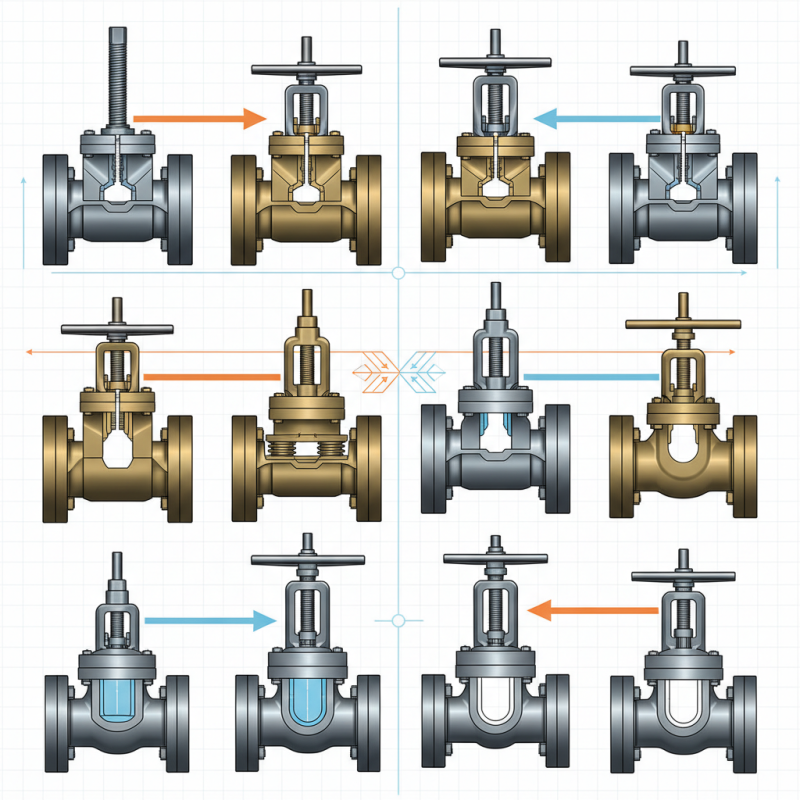
Top 10 Gate Valve Types You Should Know About?
Gate Valves play a crucial role in various industrial applications. Their primary function is to control the flow of fluids. Understanding the different types of gate valves can greatly benefit engineers and technicians. This knowledge helps in selecting the right valve for specific tasks.
In this article, we explore the top 10 gate valve types you should know about. Each valve type serves various purposes, from water supply to oil transportation. Gate valves are favored for their efficiency and reliability. Yet, not all gate valves perform equally in every situation.
Some valves may not fit specific needs, leading to inefficiencies. It's essential to evaluate their design and material. Consider the operating conditions and the potential for leakage. This exploration will enhance your understanding and decision-making process when working with gate valves.
Overview of Gate Valves and Their Applications
Gate valves are essential components in various piping systems. They control fluid flow in applications such as water supply, wastewater management, and industrial processes. Designed for on-off service, these valves can either fully open or close, allowing for minimal pressure loss. This characteristic makes them ideal for isolation purposes. Gate valves are often used where a straight-line flow is critical.
The applications of gate valves span a range of industries. They are common in water treatment facilities, oil and gas industries, and chemical processing. In each case, reliability and performance are key. However, they are not perfect. Sometimes, they can experience wear and tear. Regular maintenance is vital to ensure functionality. Without this, issues like leakage may arise over time. Understanding these potential pitfalls can aid in better selection and usage of gate valves in various systems.
Essential Components of Gate Valves Explained
Gate valves are crucial for controlling fluid flow in various applications. They feature essential components that determine their efficiency and reliability. The body forms the main structure, typically made from robust materials like cast iron or stainless steel. This ensures durability and resistance to harsh environments.
A key part of the gate valve is the wedge or disc. It moves up and down to open or close the valve. Sometimes, this mechanism can wear out or become misaligned, leading to leakage. Regular maintenance is important. The stem connects the disc to the actuator, allowing for manual or automated operation. If the stem corroded, it could affect performance.
Another significant component is the bonnet, which houses the stem, providing a leak-proof seal. Issues arise if the packing becomes worn. Therefore, checking the packing regularly is wise. Each of these components plays a vital role in the overall function of the gate valve, and overlooking even one can lead to operational problems.
Top 10 Gate Valve Types You Should Know About
| Valve Type | Material | Application | Pressure Rating | Temperature Rating |
| Wedge Gate Valve | Cast Iron | Water Supply | 150 psi | -20°C to 80°C |
| Parallel Gate Valve | Stainless Steel | Oil & Gas | 300 psi | -30°C to 200°C |
| Slab Gate Valve | Carbon Steel | Industrial Applications | 600 psi | -20°C to 150°C |
| Expanding Gate Valve | Aluminum Bronze | Marine Applications | 500 psi | 0°C to 70°C |
| Knife Gate Valve | PVC | Slurry Systems | 150 psi | -10°C to 60°C |
| Dual Plate Gate Valve | Ductile Iron | Water & Wastewater | 250 psi | -10°C to 80°C |
| V-Port Gate Valve | Bronze | Flow Control | 350 psi | -20°C to 120°C |
| Flanged Gate Valve | Steel | Power Generation | 600 psi | -30°C to 220°C |
| Actuated Gate Valve | Composite Materials | Automated Systems | 200 psi | -20°C to 60°C |
| Swing Gate Valve | Stainless Steel | HVAC Systems | 400 psi | -20°C to 150°C |
Key Types of Gate Valves: Features and Benefits
Gate valves are essential components in many piping systems. They are widely used for controlling fluid flow. Some common types include rising stem, non-rising stem, and blow-off valves. Each type has its own unique features and advantages.
Rising stem gate valves are easy to operate. They provide clear visibility of the valve's position. Non-rising stem valves save space, making them ideal for tight environments. Blow-off valves, on the other hand, help in removing accumulated debris. This can enhance system efficiency and prolong lifespan.
One significant feature of gate valves is their ability to handle high pressure. They can prevent leaks effectively. However, improper installation can lead to issues. Users often overlook the maintenance aspect. Regular checks are crucial to ensure optimal performance. Understanding the different types allows for better decision-making. Knowing the features and benefits helps in choosing the right valve for specific needs. This, in turn, can minimize operational challenges.
Comparison of Common Materials Used in Gate Valves
Gate valves play a crucial role in controlling the flow of liquids and gases. The materials used in their construction significantly impact their performance and longevity. Common materials include cast iron, stainless steel, and brass. Each type has its unique benefits and shortcomings.
Cast iron is often preferred for its strength and cost-effectiveness. It resists high pressures but may corrode over time, especially in harsh environments.
Stainless steel, known for its durability, is great for corrosive fluids. However, it comes at a higher price point.
Brass is another option, ideal for low-pressure applications, but it might not hold up as well under extreme conditions.
Choosing the right material is not always straightforward. Factors like temperature, pressure, and fluid type all come into play. It's essential to weigh the pros and cons carefully. Sometimes, the best choice isn't the most expensive one. Balancing cost with functionality requires thought. Gate valves might be simple in concept, but material selection can be complex.
Maintenance Tips for Ensuring Gate Valve Longevity
Maintaining gate valves is crucial for their efficient operation and longevity. Regular inspections can identify wear and tear early. According to industry reports, proper maintenance can extend the lifespan of gate valves by up to 30%. This includes checking for leaks, ensuring seals are intact, and verifying the valve's alignment.
Lubrication is another key factor. Valves should be lubricated according to manufacturer specifications. Over-lubrication can attract dirt and debris, causing blockages. A study revealed that 20% of gate valve failures were due to inadequate lubrication practices. It's essential to use the right lubricants to avoid compatibility issues, which can lead to costly repairs.
Environment plays a significant role too. Gate valves exposed to harsh conditions can deteriorate more quickly. Corrosive environments can reduce the valve's efficacy. Regular cleaning and protective measures are essential. Operators often forget this aspect, leading to performance issues. Being proactive can save both time and money in the long run.
Maintenance Tips for Ensuring Gate Valve Longevity