How to Choose the Right Artificial Lift Technologies for Oil Production?
Choosing the right Artificial Lift Technologies is crucial for optimizing oil production. John Smith, a renowned expert in the field, emphasizes this importance with his quote, "Selecting the best technology can maximize efficiency and ROI."
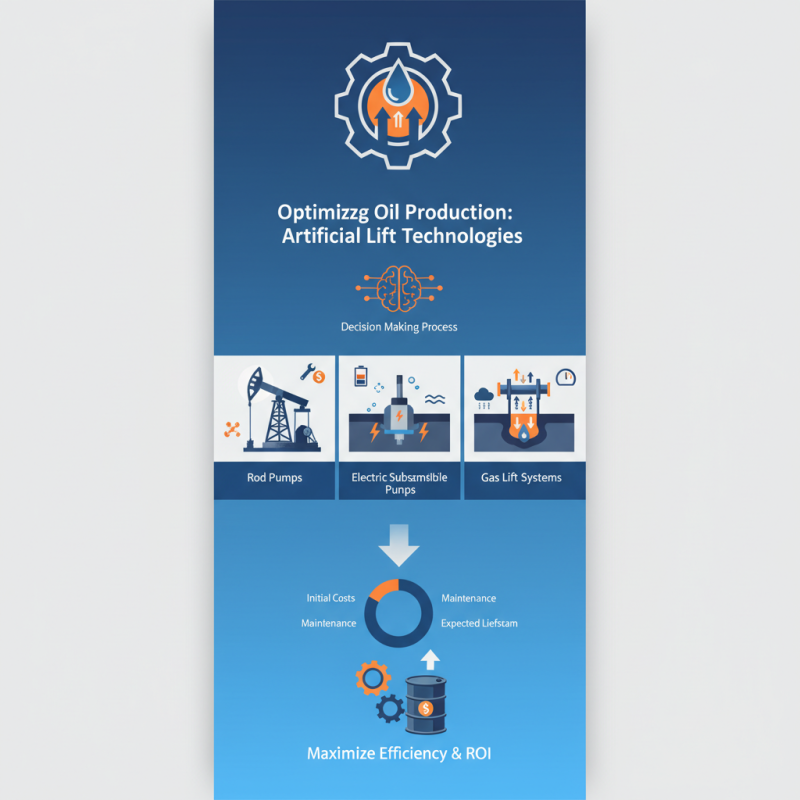
Different oilfields possess unique challenges that vary in geography, depth, and pressure. This diversity demands tailored solutions to address specific needs. Artificial Lift Technologies play a vital role in overcoming these challenges. These technologies include electric submersible pumps, gas lift systems, and rod pumps. Each has its advantages and limitations, warranting careful evaluation.
The decision-making process can be complicated. Factors such as initial costs, maintenance, and the expected lifespan of technology must be considered. Inadequate choices can lead to production losses. Therefore, understanding the interplay of these elements is essential for success in the oil industry.
Understanding Artificial Lift Technologies in Oil Production
Artificial lift technologies play a critical role in oil production by enhancing fluid flow from wells. Understanding these technologies is vital for optimizing extraction and maximizing efficiency. Various methods exist, each with its set of advantages and limitations. For instance, gas lift is widely used in declining reservoirs. However, it may not be suitable for every scenario.
Another popular method is sucker rod pumping. It is effective for wells with moderate production rates. Yet, it comes with mechanical wear and tear that requires regular maintenance. Electric submersible pumps (ESPs) can handle high flow rates, but their installation can be complex. Choosing the right technology demands careful consideration of the reservoir conditions, production goals, and operational constraints.
It is essential to assess the specific challenges within each oil field. Factors such as depth, viscosity, and gas-to-oil ratio directly impact the choice of technology. Sometimes, trial and error may be necessary, leading to potential setbacks. Ignoring the unique characteristics of each reservoir can result in inefficiencies and increased costs. Embracing a flexible approach may yield better results in the long run.
Factors Influencing the Selection of Artificial Lift Systems
Selecting the appropriate artificial lift technology greatly affects oil production efficiency. Various factors come into play during this selection. Well depth is crucial. For instance, vertical wells may benefit from electric submersible pumps (ESPs), while deviated wells might require gas lift systems. A study showed that ESPs can increase production by more than 40% in specific cases.
Production rates also influence choices. High-rate wells often need robust systems like rod pumps, while lower-rate scenarios might utilize simpler solutions. Pressure conditions add complexity. Lower reservoir pressures often require lift systems that can adjust to fluctuating conditions. A report from the Society of Petroleum Engineers noted that selection errors can lead to a 15-20% drop in production efficiency.
Cost is a vital consideration too. Budget constraints might limit options for some operators. Certain technologies offer high initial costs but may lead to long-term savings. Maintenance and operational requirements change based on the system selected. Simple systems might seem attractive but can complicate maintenance workflows. Reflecting on these factors is essential as missteps in selection can hinder production goals significantly.
Comparative Analysis of Common Artificial Lift Methods
When selecting artificial lift methods for oil production, it's essential to consider various techniques and their specific applications. Each method has its own advantages and drawbacks. For example, rod pumps are widely used for shallow wells. They are simple and cost-effective but may struggle in deeper wells. This can result in increased wear and maintenance costs.
On the other hand, gas lift systems provide a different approach. They utilize injected gas to reduce fluid density, allowing oil to flow more easily. This system is effective in high-volume wells. However, it can be complex to manage. Operators may face challenges with gas supply and compression efficiency.
Electric submersible pumps (ESPs) are another common choice. They are efficient in lifting large volumes of fluid. However, installation can be expensive. Their reliability also varies with well conditions. Some operators experience unexpected failures, leading to costly downtime. Choosing the right method requires careful consideration of the specific well environment and production goals. Each option requires reflection on the balance between cost, efficiency, and potential risks.
How to Choose the Right Artificial Lift Technologies for Oil Production? - Comparative Analysis of Common Artificial Lift Methods
| Lift Method | Efficiency (%) | Cost ($/barrel) | Maintenance Frequency (Months) | Best Use Case |
| Rod Pump | 80 | 10 | 6 | Shallow Wells |
| Electrical Submersible Pump (ESP) | 90 | 15 | 12 | Deep Wells |
| Gas Lift | 85 | 8 | 8 | High Gas-to-Oil Ratio |
| Progressing Cavity Pump (PCP) | 88 | 12 | 10 | Viscous Fluid Handling |
| Beam Pump | 75 | 11 | 9 | Medium Depth Wells |
Evaluating Well Characteristics for Optimal Lift Technology
Choosing the right artificial lift technology is crucial for oil production. Evaluating well characteristics is the first step in this process. Factors like depth, reservoir pressure, and fluid properties play a significant role in deciding the optimal lift method.
For example, wells with a depth of over 10,000 feet often require more robust systems. According to a recent industry survey, around 70% of these deep wells benefit from electric submersible pumps due to their efficiency. However, fluid viscosity can complicate this choice. High-viscosity fluids typically demand different technologies, like gas lift systems, which can handle varying pressure conditions more effectively.
It's essential to recognize that not all technologies work well in every scenario. A study showed that about 30% of wells using traditional beam pumps underperformed due to improper selection. The need for flexibility and adaptability cannot be overstated. Continuous performance monitoring is essential to reevaluate and adjust the chosen method for optimal output. Making informed decisions based on specific well characteristics is imperative for achieving efficient oil recovery.
Choosing the Right Artificial Lift Technologies for Oil Production
This chart showcases the efficiency percentages of different artificial lift technologies used in oil production. Understanding how each technology performs can aid in making informed decisions about which method best suits specific well characteristics.
Cost-Benefit Assessment of Artificial Lift Options in Oil Wells
When assessing artificial lift technologies, a cost-benefit analysis is crucial. Oil production involves significant investment. Selecting the right technology can greatly affect the bottom line. Each option has distinct costs and potential returns. Understanding these factors is key to making informed choices.
Tips: Focus on the projected lifespan of the system. Short-term savings might lead to higher maintenance costs later. Evaluate the compatibility with your well conditions. Some technologies may not perform well in specific environments.
Data plays a critical role in this assessment. Gather historical performance data and production rates. This can provide insights into what might work best for your situation. Remember, the most expensive option isn't always the best. Analyze how often each technology needs service. Operational downtime can equate to lost revenue.
Affordable solutions may seem appealing but can lead to compromises. Rethink the long-term implications. Evaluate the potential for scaling up operations or switching methods. Misjudgment here could lead to expensive corrections down the line.

