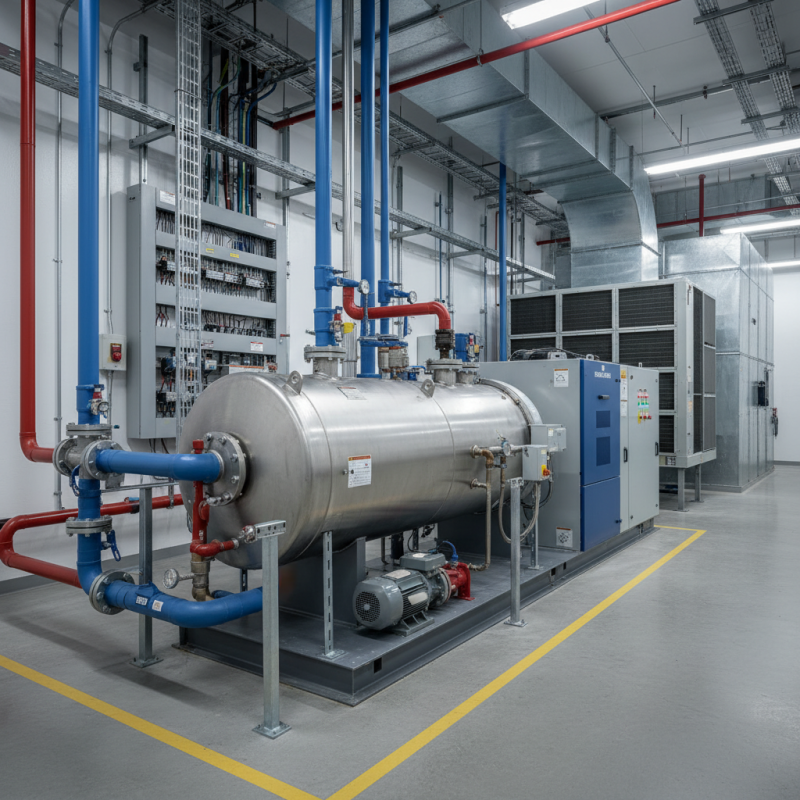
What is Chiller Series and How Does It Work?
The Chiller Series plays a crucial role in modern HVAC systems. According to industry reports, HVAC systems account for nearly 40% of total energy consumption in commercial buildings. This highlights the significance of energy-efficient solutions.
Chiller Series units are designed to offer cooling solutions in various applications. They help maintain optimal temperatures in industries such as pharmaceuticals and food processing. However, the complexity of these systems can lead to misunderstandings about their operation.
Many users may not fully grasp the technology behind the Chiller Series. Lack of education can result in inefficient use. Consequently, the potential energy savings might not be realized. As energy efficiency becomes increasingly vital, understanding how these chillers work is essential. Moving forward, knowledge about the Chiller Series can lead to better energy practices and lower operational costs.
What is a Chiller Series?
Chiller Series refers to a collection of cooling systems designed to manage temperature in various applications. These systems play a vital role in industrial settings, commercial spaces, and large buildings. According to the International Institute of Refrigeration, around 20% of global energy consumption is attributed to refrigeration and air conditioning. Chillers, therefore, are an integral part of efficient energy management.
In a Chiller Series, each unit typically operates through vapor compression or absorption principles. Various components cooperate to remove heat. For instance, a compressor circulates refrigerant through the system. The refrigerant absorbs heat and transforms from a liquid to a gas. A study by the American Society of Heating, Refrigerating and Air-Conditioning Engineers notes that advanced chillers can achieve a coefficient of performance (COP) greater than 6. This indicates a remarkable level of efficiency.
However, maintenance can be a challenge. Regular checks and balances are necessary to ensure optimal performance. Neglect can lead to significant inefficiencies. A report from the Energy Department indicates that poorly maintained chillers can waste up to 30% more energy. This data highlights an ongoing need for reflection on operational practices. The intricacies involved in managing a Chiller Series may appear overwhelming. Yet, understanding its components is crucial for maximizing efficiency and sustainability.
Components of Chiller Systems
Chiller systems play a crucial role in maintaining optimal temperatures in various applications. Understanding their components is vital for efficient operation. A typical chiller system consists of four main components: the compressor, condenser, expansion valve, and evaporator.
The compressor is the heart of the chiller. It circulates the refrigerant and increases its pressure. This process converts low-pressure refrigerant into a high-pressure gas. According to the International Institute of Refrigeration, about 60% of industrial energy consumption relates to cooling systems. Therefore, optimizing compressors can lead to significant energy savings. However, many users overlook regular maintenance, which can decrease efficiency.
The condenser works to remove heat. It transforms the refrigerant gas back into a liquid by dissipating heat into the environment. The chilling process relies on effective heat exchange. Poor condenser performance can lead to inefficient operation. This often results in higher operational costs. The expansion valve decreases the refrigerant's pressure before it enters the evaporator. This is crucial for cooling. A well-maintained evaporator absorbs heat from the environment, completing the cycle. Neglecting any component can lead to system failures and expensive repairs.
How Chiller Systems Work
Chiller systems play a crucial role in various industries. They are used for cooling in buildings, manufacturing processes, and more. At the core, a chiller absorbs heat from a fluid. It then releases that heat outside, maintaining the desired temperature. This process typically involves a refrigeration cycle.
Chillers can be either air-cooled or water-cooled. Air-cooled chillers use ambient air to dissipate heat. Meanwhile, water-cooled chillers utilize cooling towers. According to industry reports, the chillers market is expected to grow significantly, reaching over $10 billion by 2025. This growth is driven by increasing demand for energy-efficient systems.
Tips: Regular maintenance is essential for optimal performance. Cleaning filters and checking refrigerant levels can greatly enhance efficiency. Not addressing these issues can lead to increased costs and poor performance over time. A small oversight can result in significant delays during peak demand periods.
Types of Chillers in the Market
Chillers are essential in modern HVAC systems, providing cooling for various applications. There are several types of chillers available in the market today. These include air-cooled chillers, water-cooled chillers, and absorption chillers. According to a recent industry report, air-cooled chillers dominate the market due to their flexibility and ease of installation. However, they may be less efficient in large industrial settings compared to water-cooled options.
Water-cooled chillers typically offer better efficiency, particularly in hot climates. They can consume around 25% less energy than their air-cooled counterparts. Their performance is often enhanced when used in conjunction with cooling towers. Absorption chillers, on the other hand, utilize heat sources instead of electricity, making them suitable for specific industries. They can operate effectively in facilities with excess waste heat.
Despite the advantages, each type of chiller presents challenges. Air-cooled chillers may require more space and can be noisy. Water-cooled chillers involve higher initial installation costs. Absorption chillers can be complex and require constant maintenance. Evaluating the specific needs and conditions of a facility is crucial. Many companies still overlook these factors, resulting in inefficient cooling systems.
What is Chiller Series and How Does It Work? - Types of Chillers in the Market
| Type of Chiller | Cooling Capacity (tons) | Energy Efficiency Ratio (EER) | Application | Refrigerant Type |
| Air-Cooled Chiller | 10 - 500 | 3.0 - 6.0 | Commercial Buildings | R-410A |
| Water-Cooled Chiller | 50 - 2000 | 4.0 - 10.0 | Industrial Applications | R-123 |
| Absorption Chiller | 100 - 500 | 1.2 - 2.5 | Large Facilities | Water-Lithium Bromide |
| Scroll Chiller | 5 - 150 | 3.5 - 6.5 | Small to Medium-sized Buildings | R-410A |
| Centrifugal Chiller | 300 - 5000 | 5.0 - 9.0 | Large Commercial Operations | R-134A |
Applications and Benefits of Chiller Systems
Chiller systems play a crucial role in various industries. They provide cooling for numerous applications such as HVAC, food processing, and data centers. According to the U.S. Department of Energy, chillers account for nearly 30% of the total energy used in commercial buildings. This substantial percentage highlights their importance in energy conservation.
One major application of chiller systems is in industrial cooling processes. They help maintain optimal operating temperatures for machinery. In food manufacturing, for example, consistent cooling is vital to ensure food safety. A report from the Food and Drug Administration indicates that temperature control can prevent foodborne illnesses and waste.
Chillers also contribute to energy efficiency. Studies show that modern systems can reduce energy use by up to 40% compared to older models. However, many facilities still utilize outdated chillers. This inefficiency could raise operational costs significantly. Companies should rethink their cooling strategies. Investing in advanced chiller technologies may yield substantial savings in the long run.
Applications and Benefits of Chiller Systems